Monday, November 26, 2018

Mental Health in Xavier Dolan's 'Mommy'
The three core characters in Mommy are simultaneously disconnected from one another and connected to one another.
Diane "Die" Després lost her husband three years ago. Since then, she's struggled with finances, and keeping track of her son Steve, who's ADHD only got worse and worse after his father died. The film only mentions the father a few times, and doesn't ever mention how Die managed to grieve, if she even did at all. Did she suppress her emotions? Is that why her life is slowly falling apart? Due to her struggles, she holds no social life, and little to no friends. She is isolated.
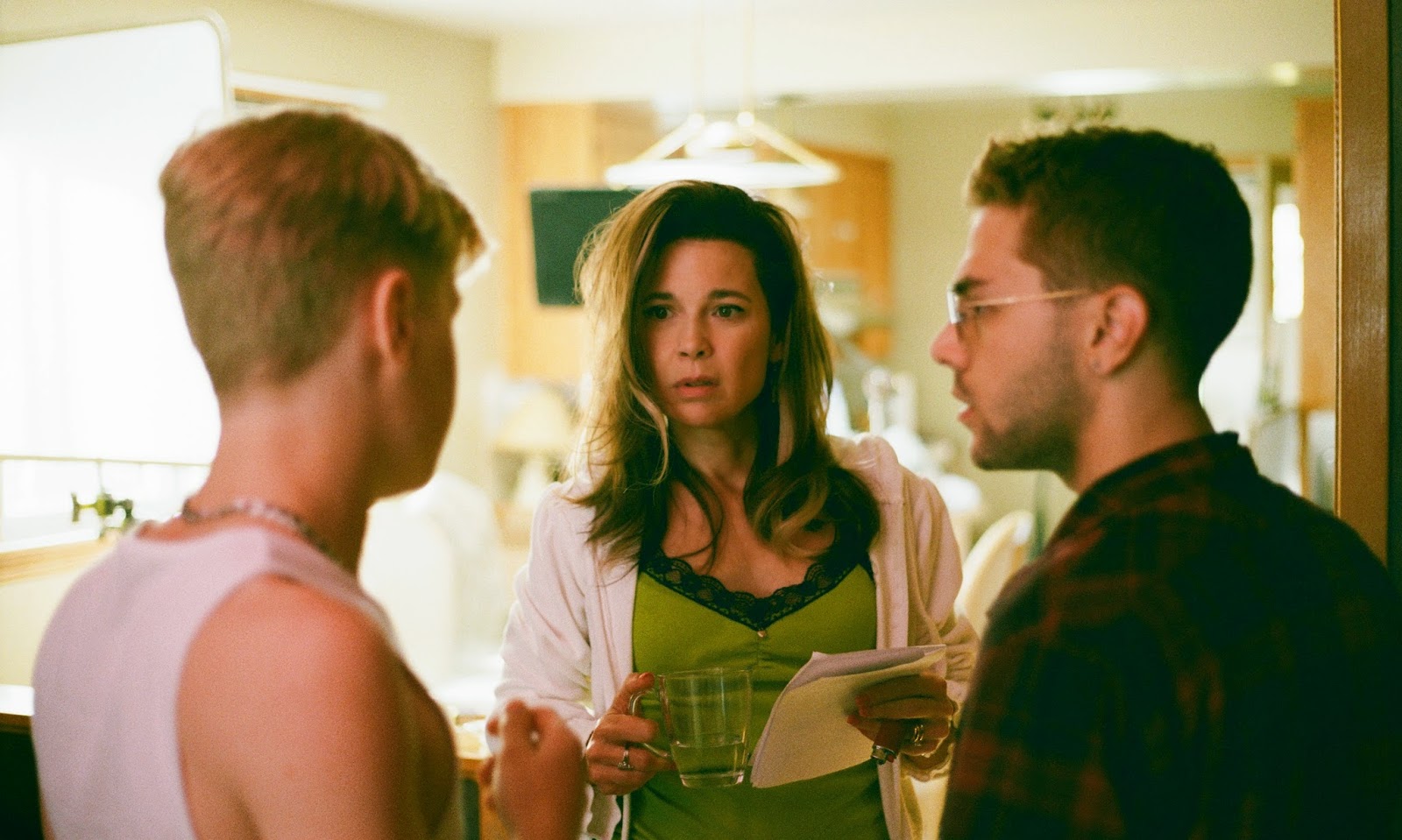
Steve's ADHD also causes him isolation. With his anger, he becomes dangerous and violent. In his love, he becomes too affectionate, to the point where he kisses his mother on the lips. Deep down though, he means no harm...both him and Die know this. Yet these acts of violence only causes more and more isolation. Perhaps just like his mother, Steve didn't have the support he needed when his father died. And to this lack of emotional support, his grasp on his emotions fell apart, only worsening his ADHD condition. When a man comes near Die, Steve acts with hostility. Despite how the men may mean well, Steve is overly protective of his mother, to the point of self destruction. Maybe he's worried that he'll lose his mother as well, and can't bare the notion of having lost both of his parents.
Their neighbor across the street, Kyla, is what connects them all, a trio comforting one another. Kyla is suffering from PTSD, due to an unknown event at a high school she taught at. She can barely speak, barely move. Yet around Die and Steve, she begins to step back into her body, and into the world. Kyla's husband shakes his head at her, shaming her condition. But Die and Steve respect her. They let her speak her mind without judgement. They encourage her her when he lets loose to dance. They accept her, and through that acceptance, she accepts Die and Steve despite their brutal, violent, emotional struggles.

Despite her quietness, Kyla holds buried rage. When Steve won't quiet down while she;s babysitting him, she leaps on him and pins him to the ground, threatening him with comments about his deceased father. Steve recoils and weeps.
These three characters hold pain buried within, yet only allow themselves to breath around one another. Perhaps it's through their pain that they understand one another. Everyone around them seemingly has their life together, except for them. They find comfort for one another. It's due to their traumatic pasts that offers them a different perspective on life; moments of being carefree, brought with moments of respect for one another that no one else could provide. They are both each other's biggest champions, for better or for worse.
What Xavier Dolan manages to do is to get in the pscyhe of his characters in various different ways, especially through his condensed, 1:1 ratio, reflecting the narrow, constrained feelings of stress his characters endure. The ratio only expands when the characters are experiencing freedom. When Die, Kyla, and Steve are bicycling with one another, Steve expands the ratio himself, symbolizing how they can be completely free and stable around one another. And moments before Die brings Steve to a caring facility, the ratio expands once more in a daydream of what Die wanted for her son: a normal life full of charisma, success, and love. Or more accurately, it could be Die accepting that this dream of hers is no longer possible. Here too, the expanded ratio aspect could reflect freedom, as Die is no longer bound to her hopeless wish of a normal life for her and her son.
Their neighbor across the street, Kyla, is what connects them all, a trio comforting one another. Kyla is suffering from PTSD, due to an unknown event at a high school she taught at. She can barely speak, barely move. Yet around Die and Steve, she begins to step back into her body, and into the world. Kyla's husband shakes his head at her, shaming her condition. But Die and Steve respect her. They let her speak her mind without judgement. They encourage her her when he lets loose to dance. They accept her, and through that acceptance, she accepts Die and Steve despite their brutal, violent, emotional struggles.
Despite her quietness, Kyla holds buried rage. When Steve won't quiet down while she;s babysitting him, she leaps on him and pins him to the ground, threatening him with comments about his deceased father. Steve recoils and weeps.
These three characters hold pain buried within, yet only allow themselves to breath around one another. Perhaps it's through their pain that they understand one another. Everyone around them seemingly has their life together, except for them. They find comfort for one another. It's due to their traumatic pasts that offers them a different perspective on life; moments of being carefree, brought with moments of respect for one another that no one else could provide. They are both each other's biggest champions, for better or for worse.
What Xavier Dolan manages to do is to get in the pscyhe of his characters in various different ways, especially through his condensed, 1:1 ratio, reflecting the narrow, constrained feelings of stress his characters endure. The ratio only expands when the characters are experiencing freedom. When Die, Kyla, and Steve are bicycling with one another, Steve expands the ratio himself, symbolizing how they can be completely free and stable around one another. And moments before Die brings Steve to a caring facility, the ratio expands once more in a daydream of what Die wanted for her son: a normal life full of charisma, success, and love. Or more accurately, it could be Die accepting that this dream of hers is no longer possible. Here too, the expanded ratio aspect could reflect freedom, as Die is no longer bound to her hopeless wish of a normal life for her and her son.
Thursday, November 15, 2018
Alfonos Caurón's Roma: A Glimpse Into His Childood
Roma is a paradox.
It features almost everything you would expect from a film directed by Alfonso Caurón, yet simultaneously presents something we haven't seen from him before.

After directing big budget films such as Harry Potter and the Prisoner of Azkaban and Gravity, Caurón is going back to his roots whilst applying his filmmaking techniques and tactics he's utilized and honed over the years. From his masterful long shots, his sweeping cinematography, and his ability to make his audience feel as if they know the characters in the film. He's applying those skills from this larger movies, into this intimate, smaller, yet equally powerful movie. It actually may be even more powerful because it's so personal.
It's not only a story inspired by his childhood, but also serves as a callback to some of his earlier films also set in Mexico, his directorial debut of Sólo con Tu Pareja and Y Tu Mamá También.
While those films featured layers of subtext, Roma is different. It's straightforward and simple. There's nothing to necessarily interpret or ponder about. We're simply watching this family live their life, in their tragedies, their humorous moments, as well as their life changing and life threatening moments.
It can be deemed his most visually appealing film, yet it still holds moments that are hard to watch. In a way, another way of being a reflection on his childhood; moments that are filled with innocence and happiness, accompanied with those moments of darkness we tend not to think about.
At a screening at the San Francisco International Film Festival, Caurón himself stated that he got emotional on set due to how personal some of the scenes were. He mentioned how this film was cathartic in a way, in looking back and processing certain things he hadn't really done before. This brings the authenticity of the film to a new level that most likely isn't in his past films. With such a personal touch, we're getting more than just an Alonso Caurón film.
We're learning more about him while simultaneously he's learning more about himself.
It features almost everything you would expect from a film directed by Alfonso Caurón, yet simultaneously presents something we haven't seen from him before.
After directing big budget films such as Harry Potter and the Prisoner of Azkaban and Gravity, Caurón is going back to his roots whilst applying his filmmaking techniques and tactics he's utilized and honed over the years. From his masterful long shots, his sweeping cinematography, and his ability to make his audience feel as if they know the characters in the film. He's applying those skills from this larger movies, into this intimate, smaller, yet equally powerful movie. It actually may be even more powerful because it's so personal.
It's not only a story inspired by his childhood, but also serves as a callback to some of his earlier films also set in Mexico, his directorial debut of Sólo con Tu Pareja and Y Tu Mamá También.
While those films featured layers of subtext, Roma is different. It's straightforward and simple. There's nothing to necessarily interpret or ponder about. We're simply watching this family live their life, in their tragedies, their humorous moments, as well as their life changing and life threatening moments.
It can be deemed his most visually appealing film, yet it still holds moments that are hard to watch. In a way, another way of being a reflection on his childhood; moments that are filled with innocence and happiness, accompanied with those moments of darkness we tend not to think about.
At a screening at the San Francisco International Film Festival, Caurón himself stated that he got emotional on set due to how personal some of the scenes were. He mentioned how this film was cathartic in a way, in looking back and processing certain things he hadn't really done before. This brings the authenticity of the film to a new level that most likely isn't in his past films. With such a personal touch, we're getting more than just an Alonso Caurón film.
We're learning more about him while simultaneously he's learning more about himself.
Saturday, November 10, 2018
The Happy Ending of Donnie Darko

Richard Kelly's Donnie Darko is known for it's creepy, humorous, WTF visuals and story. The film itself is hard to categorize in a genre; it holds elements of drama, humor, science fiction, fantasy, and bizarre characters and images. But no matter how bizarre the film may be, it holds themes as real and strong that motivate and capture the audience. Despite the ending where Donnie is in bed laughing seconds away from being killed by the jet engine, the film ends on a somewhat positive, perhaps even happy, note.

Donnie is suffering from schizophrenia and is distant from his family. He fights with his sister, calls his mother names, and seems passive at school. And when he sees Frank, the man in a bunny suit telling him that the world is coming to end, Donnie begins to question reality. Is he it illness that's causing him to see this? Or is it, in fact, real?
In the director's cut, it's made clear that it's real, and Donnie is the only one who can save the universe. With that reality, he embraces his task and begins to do what he can to be the savior that was meant to be. But even in the original cut where the story is more vague and easily open to interpretation, it can still be seen that Donnie begins to change in a positive way. Despite crumbling from the pressure of saving the universe, he shows courage as he seeks to understand what is happening around him: seeking answers from a professor, seeking understanding and love from Gretchen, his crush, and seeking a reconnection with his family as he kisses his younger sister goodbye before her trip to Los Angeles.  It's through his courage and love that brings Donnie to fulfilling his destiny and saving the universe. In a final scene, he’s on his bed cheerfully laughing just as when an airplane turbine lands in his room and kills him. Is he happy because he managed to save the universe? That he managed to escape fear of the unknown? That he realized that he actually had a purpose? Some viewers interpreted this scene as Donnie sacrificing himself, as he knew what was coming. But he didn't have to sacrifice himself as he had already saved the universe. He didn’t have to die in order to keep the others alive. He died because he was no longer suppressed by his fear of death.
The whole movie has him worried about the lack of an afterlife. Donnie felt like he never fit in with the world. But as the movie progresses, we see tidbits of him accepting the unknown and coming to terms with it. With him being chosen to be the hero, it gives him some assurance that there is ‘something’ beyond death. He doesn’t know what, but it’s that ‘something’ that gives him the comfort that death isn’t just an oblivion of nothing. Since he never really fit in with this world, he chose to end his life and see what lie ahead.
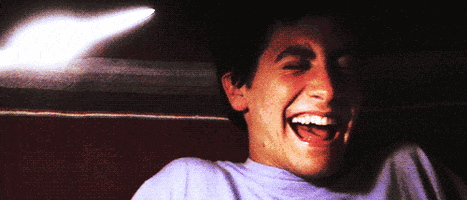
It sounds grim. But it could also be hopeful.
He’s taking a chance that he'll belong to whatever and lies beyond, since he never felt like he belonged in this world. It’s such a contradiction, to be rooting for the heroic character to end his life. Yet the Richard Kelly manages to do so, at least for me, by creating a juxtaposition that the tragedy of death is a link towards the character’s happiness, creating a plot and universe where a character’s suicide is almost praised. It’ll make one uncomfortable for rooting for that death, but for this film and it’s character, it’s his only way toward happiness. The film shows that there is universal powers and energies at play here, assuring that there is something beyond death, so why be afraid?
Donnie reached the contentment that he’d been craving for all his life, loving his family, his friends, and finding romance with Gretchen. He was finally able to step away from the fear that plagued his life, and step into love.
Subscribe to:
Comments (Atom)